
Thank you to those who have written to me about group-based children sexual exploitation, or “grooming gangs”. This is a really important issue to me, and one where the government is taking strong action to ensure we get justice for victims and put perpetrators behind bars where they belong.
The findings of Baroness Casey’s rapid review of the evidence
As you may remember, in January last year the Home Secretary commissioned Baroness Louise Casey to carry out a “rapid audit” on group-based child sexual exploitation, with the intention of pulling together all available evidence on these crimes and to make recommendations. Despite some criticism at the time, I believe this was the right course of action for ensuring the government response was led by evidence and could deliver genuine change quickly. As someone known for not pulling their punches on the most difficult issues in public life, Baroness Casey was exactly the right person to lead this review.
Baroness Casey’s report has now been published, and you can read it in full by clicking here. Perhaps the most important of the report’s findings are:
- A lack of available data means at present it is impossible to assess the scale of group-based child sexual exploitation.
- From the data that does exist, the evidence is that 78% of victims are girls, with 57% of these being between 10 and 15 years old. The use of drugs and alcohol to control victims is a common feature of grooming, with grooming behaviour beginning online also an increasingly prevalent problem.
- 76% of perpetrators of group-based child sexual exploitation are men.
- Questions around the ethnicity of perpetrators have been shied away from and is still not recorded for two-thirds of perpetrators. There is enough evidence available from three police force area’s data to show disproportionate numbers of men from Asian ethnic backgrounds amongst suspects for group-based child sexual exploitation – warranting further examination.
- A lack of examination of ethnicity has done a disservice to victims and law-abiding people in Asian communities and has played into the hands of those who want to exploit the issue of group-based child sexual exploitation to sow division.
- Child protection plans to prevent sexual abuse have fallen to their lowest level in 30 years, and there has also been a decline in the number of serious case reviews about child sexual exploitation in recent years.
- Ambivalent attitudes to victims have harmed the response to child sexual exploitation. Young girls – particularly those in the care system – have often been judged as adults rather than children, with some criminalised for offenses they committed while being groomed.
- Current age of consent laws have led to charges being downgraded or dropped when a victim under the age of sixteen was considered to be ‘in love with’ or ‘had consented to’ sexual contact with an adult.
Baroness Casey made a number of recommendations, including:
- Launching a time-limited national inquiry, running for three years, that can compel witnesses and launch and direct local inquiries.
- Changing the law so that adult men who groom and have sex with 13–15-year-olds receive mandatory charges of rape.
- Introducing mandatory reporting for grooming crimes with ethnicity and nationality data and improved data collection.
- Improving coordination between government agencies.
- Conducting further research into grooming offenses.
Immediate government action to tackle group-based child sexual exploitation
The Home Secretary has called Baroness Casey’s report “damning”, issued an unequivocal apology to victims of grooming, and committed to implementing all twelve of Baroness Casey’s recommendations.
This builds on the government’s existing commitment to enact the recommendations of the previous Alexis Jay public inquiry that reported in 2022. That inquiry made more than 20 recommendations, none of which were implemented by the previous Conservative government. It beggars belief that the Conservatives are criticising the government’s response to group-based child sexual exploitation, when they had fourteen years to take action and did absolutely nothing.
The government is also taking strong action to strengthen child protection. The Children’s Welfare and Schools Bill – which I voted for but which the Conservatives and Reform voted against – contains measures including setting up a register of children being homeschooled to prevent them falling off the radar of child services, the removal of the right to home school a child if they are subject to a child protection order, and the strengthening of council child protection services.
The government are also introducing new mandatory reporting requirements for child abuse, making it a criminal offence to fail to report suspected abuse to the authorities. This is something Keir Starmer – as a long-standing advocate for action to tackle child exploitation as a former Director of Public Prosecutions – has been calling for for more than a decade.
Coordinated police action
The National Crime Agency (NCA), the UK’s top law enforcement agency, has been tasked by the Home Secretary with leading a coordinated national push to look at historic group-based child sexual abuse cases that were dropped and identify child abusers who slipped through the cracks of previous investigations.
That work began in January, but is now being stepped up by the government on Baroness Casey’s recommendation. Since the Home Secretary asked police forces in January to identify possible grooming cases that had been closed with no further action, more than 800 cases have been identified for formal review, with the figure expected to rise above 1,000 in the coming weeks. I am hopeful that this review will identify perpetrators who previously evaded justice and put them behind bars where they belong.
National inquiry into group-based child sexual exploitation
Now that Baroness Casey has determined that a national inquiry is necessary based on a thorough review of the evidence, the government has launched a statutory public inquiry, with powers to compel witnesses and direct local investigations. It is being chaired by the former Children’s Commissioner, Anne Longfield, who is an extremely well respected child rights advocate and campaigner.
The inquiry is scrutinising how institutions – including local councils, police forces and elected officials – failed vulnerable girls across the UK, with a specific focus on mishandled or ignored complaints. It will be able to compel local deep-dive investigations into historical cases and demand answers where complaints of wrongdoing or cover-ups have been made, under powers granted by the 2005 Inquiries Act. The inquiry’s Chair will report independently, and has the power to compel testimony and access to institutional records.
My own work as your MP tackling child sexual abuse
I have been campaigning in parliament on the sexual abuse scandal in the Church of England, where it was revealed that senior members of the church covered up the sexual abuse of more than 100 young boys by John Smyth during the 1970s and 80s. These kinds of coverups are exactly what the new mandatory reporting law will seek to criminalise.
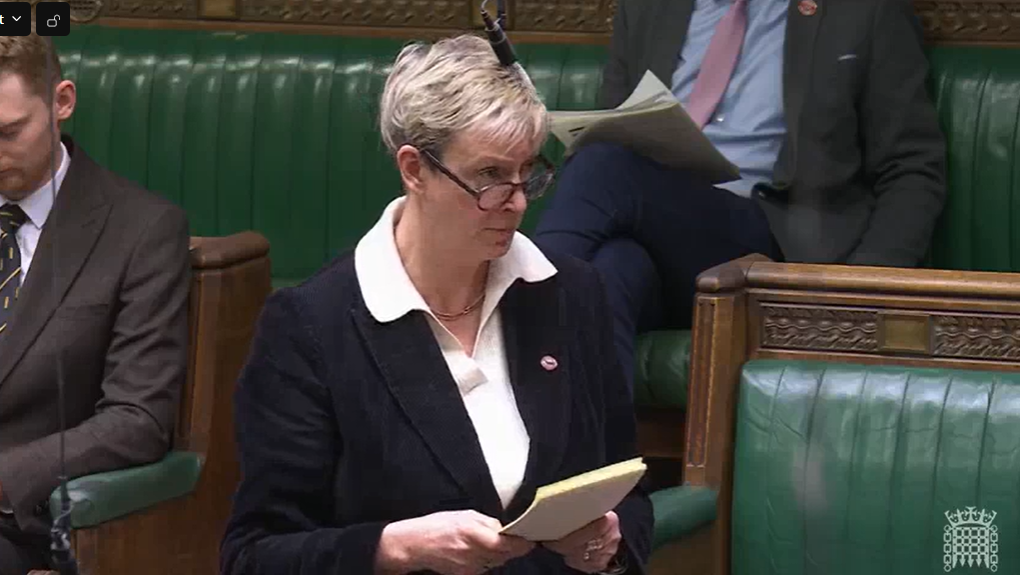
But I believe the government should be going further when it comes to the Church of England, which remains our state religion and is therefore a public institution. That’s why I am campaigning for Freedom of Information laws to be extended to the Church, to guarantee transparency, especially when it comes to rooting out child sexual abuse and those complicit in its concealment. You can watch me speaking about this issue in the House of Commons by clicking here.